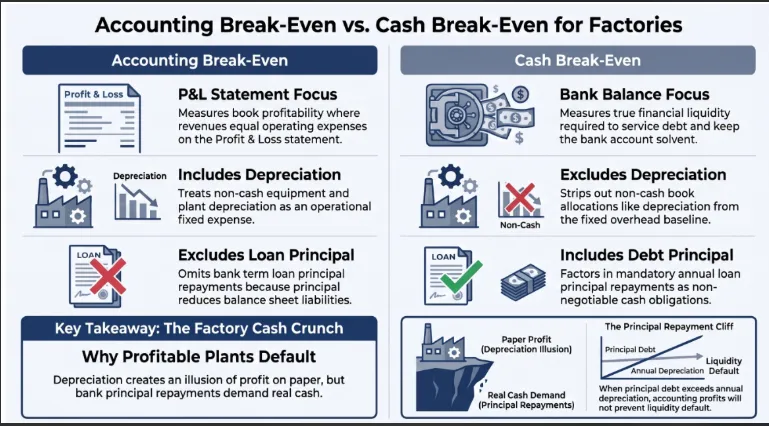
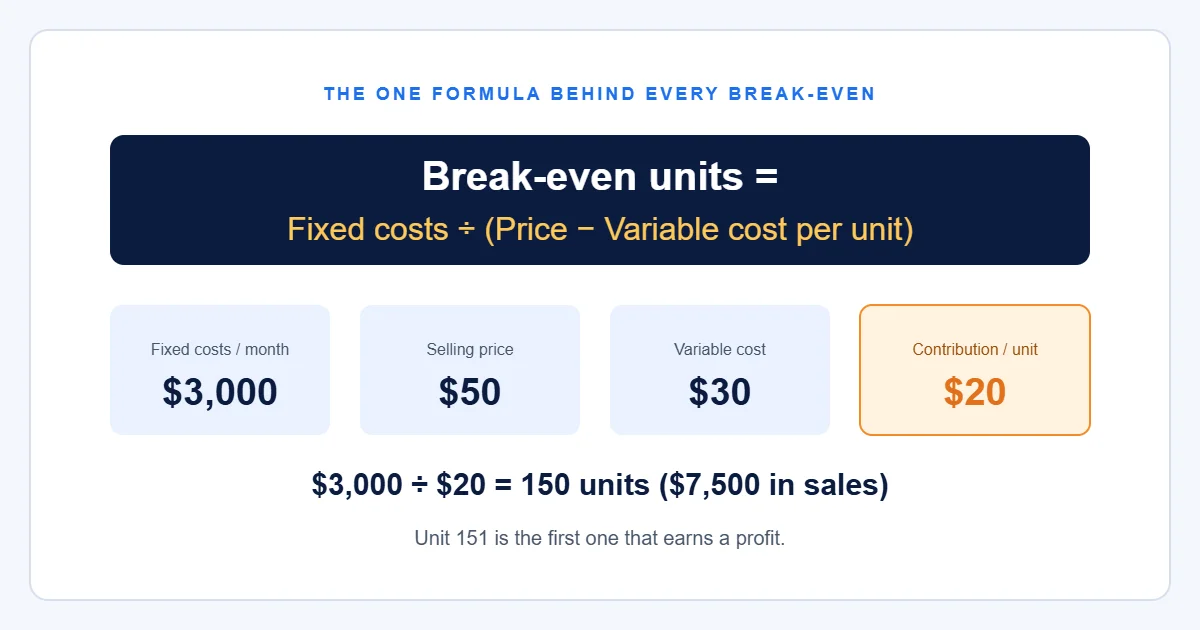
Break-even units equal total fixed costs divided by contribution margin per unit, and contribution margin is selling price minus variable cost per unit. At that volume, revenue equals total cost and profit is exactly zero.
Take a teaching example: $3,000 of monthly fixed costs, a $50 price and a $30 variable cost. The contribution is $20, so you need 150 units, or $7,500 in revenue. Unit 151 is the first one that adds profit.
The maths is easy. The hard part is splitting costs honestly. Anything that does not shrink when output drops, such as loan instalments, supervisory salaries and minimum power charges, belongs in the fixed column. Many owners park these under variable costs without realising it.
Key fact: Break-even units = fixed costs ÷ (price − variable cost).
Source: ClearTax; worked example from Small Business Finance Toolkit.
Want the full picture? Read our guide How Many Sales Do You Need Just to Break Even? (The Factory Owner’s Version), or book a free consultation to work out your own numbers.